


Go back to Blog
Rethinking BCR-ABL1 testing: Less complexity, more confidence
Rethinking BCR-ABL1 testing: Less complexity, more confidence
Rethinking BCR-ABL1 testing: Less complexity, more confidence
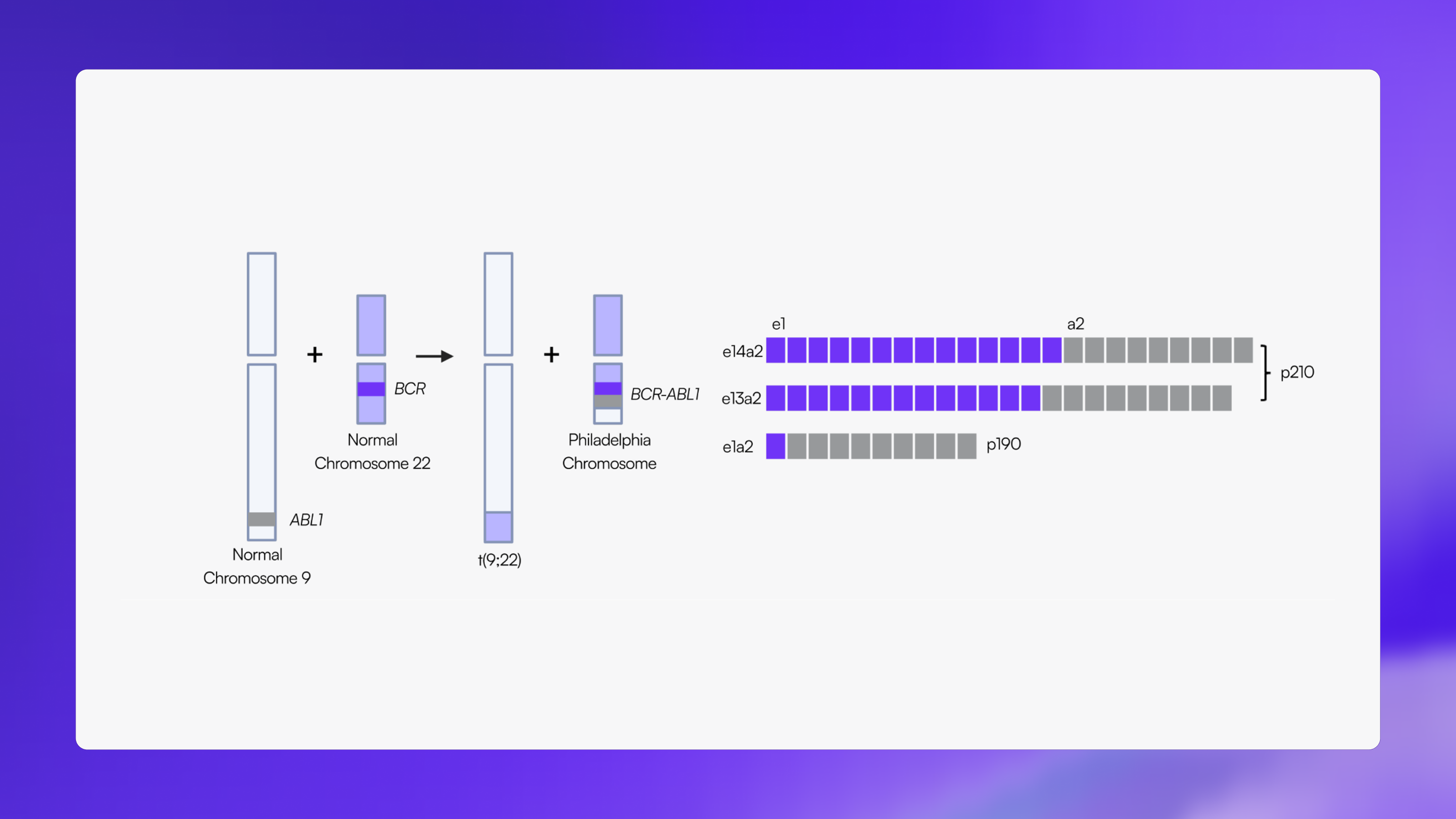
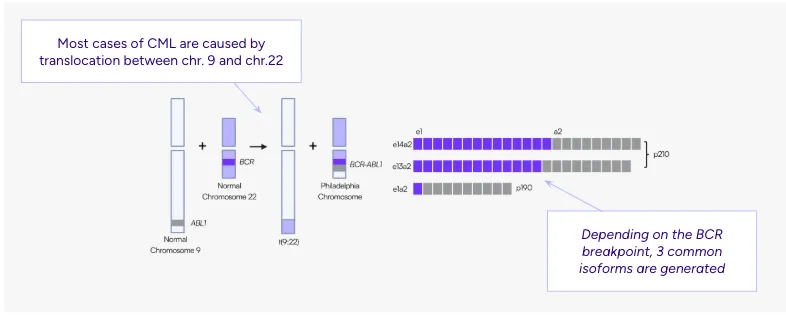
BCR-ABL1 transcript monitoring is an integral part of CML and ALL management, over 95% of CML cases and 20-30% of ALL cases are associated with translocation. Testing helps guide treatment decisions, flagging relapse, and defining deep molecular response. For clinical and molecular pathology labs, that means running the same test reliably every 3–6 months, often on-demand, with results that need to hold up across operators and runs. In this blog, we'll recap highlights from the webinar, "Highly sensitive detection of BCR-ABL1 fusion for MRD monitoring" to learn where some assays fall short - and what a purpose-built alternative looks like.
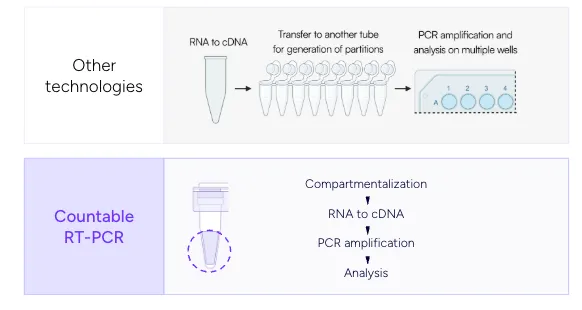
Current approaches come with meaningful trade-offs. Quantitative RT-PCR (RT-qPCR) requires standard curves and multiple single-plex reactions, one per isoform, making it time-consuming and prone to run-to-run variability. Digital RT-PCR (RT-dPCR) drops the standard curve but lacks sufficient dynamic range for BCR-ABL1 monitoring, and requires linearity validation, calibration, and sample splitting to detect rare variants, adding cost and complexity. NGS offers breadth but is cost-prohibitive for focused panels and requires sample batching that extends turnaround time, making it poorly suited for on-demand clinical testing.
All three struggle with the same core challenge: simultaneous detection of multiple isoforms (p190, p210, and others) at very low abundance against a high background of ABL1 reference copies.
Countable PCR uses ~30 million compartments to isolate and count individual RNA molecules, so each target amplifies independently — no competition, no crowding. The result is multiplex behavior that performs like single-plex: rare BCR-ABL1 transcripts remain visible even in a background of ~1 million ABL1 copies.
Key workflow advantages for labs:
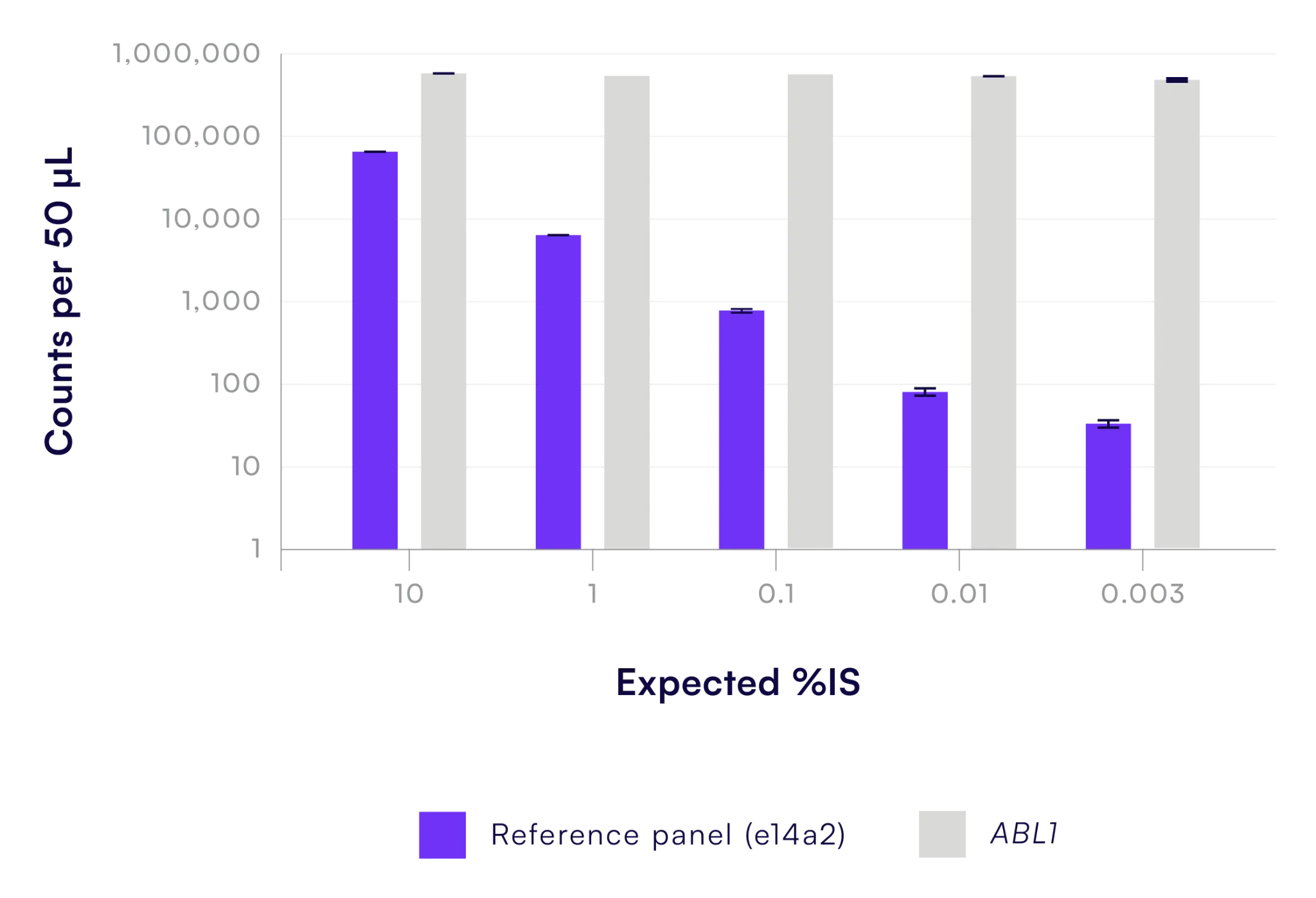
Data presented showed accurate %IS quantification across the full dynamic range, with high precision at low copy numbers and concordance with established reference panels. A Labcorp R&D director noted the platform delivers "significantly higher sensitivity with fewer reactions" and called the workflow "easy, and delivers highly precise results."
For labs looking to streamline BCR-ABL1 workflows without sacrificing sensitivity, Countable PCR offers a meaningful reduction in complexity, fewer reactions, no standard curves, and automated %IS output, while opening the door to broader oncology and NIPT applications.


Single-molecule precision. Make it count
.webp)