Not all PCR is created equal. Know which platform your experiment actually needs.
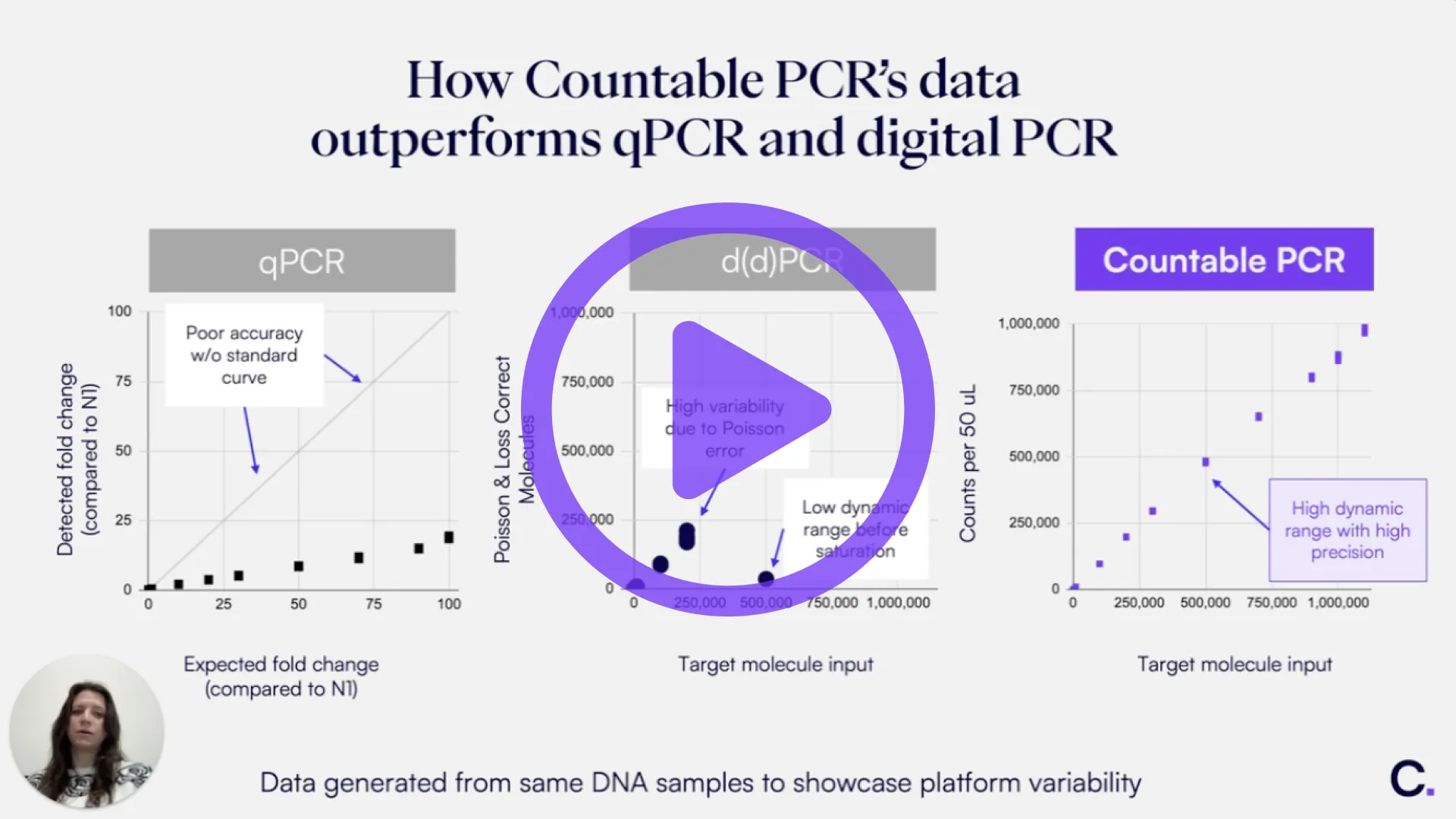
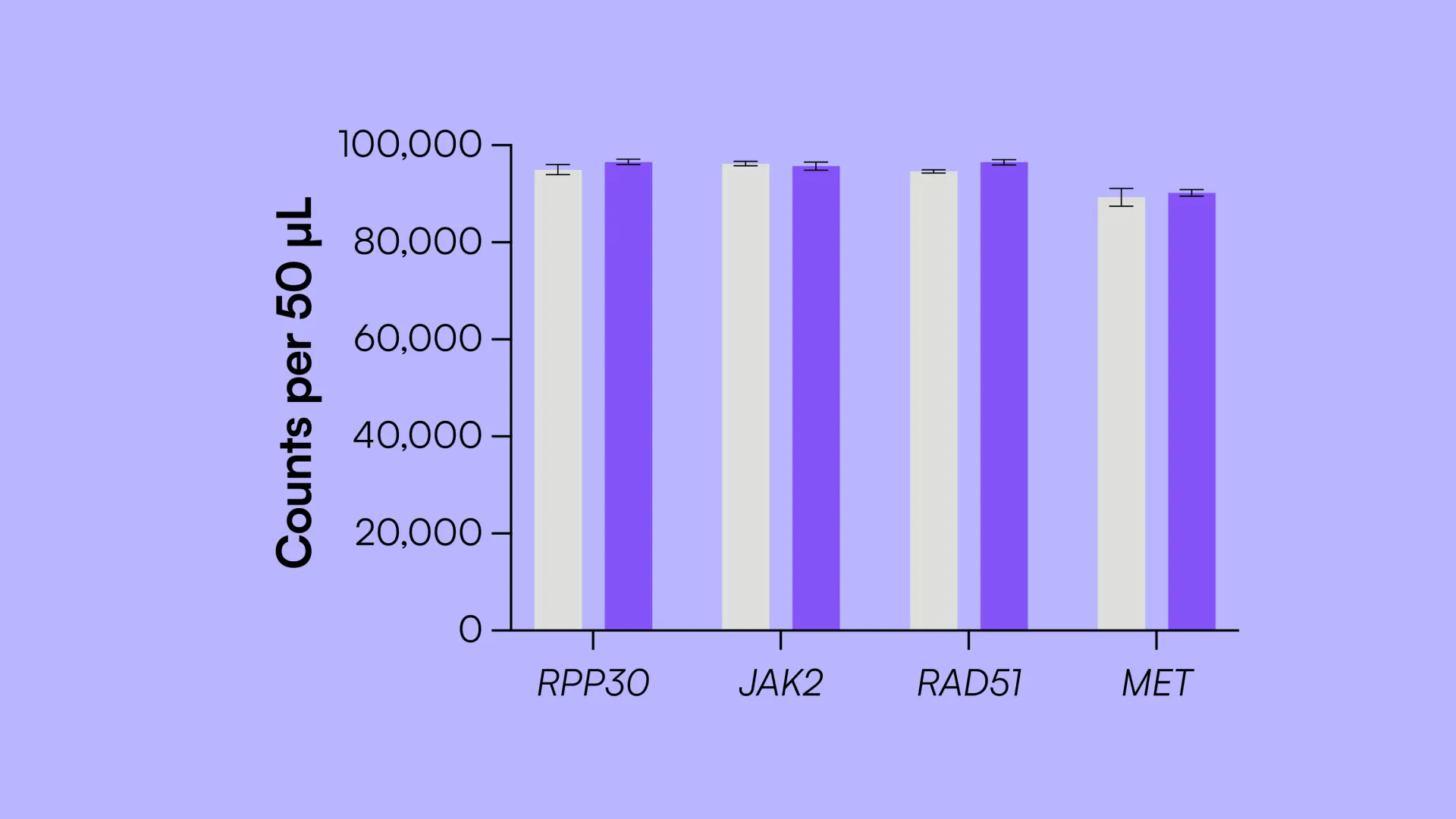
qPCR, digital PCR, single-molecule counting PCR — each generation of PCR was built to solve the limitations of the last, but the tradeoffs between them aren't always obvious until they show up in your data. Dynamic range, sensitivity, reproducibility, multiplexing burden, and how each platform actually performs can impact your experimental design and results. This guide compares all three head-to-head and gives you a framework for matching the method to what you're trying to measure.
In this eBook, you'll learn:
- How qPCR, dPCR, and single-molecule counting PCR differ,from real-time kinetics to direct molecule counting,and strengths and weaknesses of each
- Why partition count drives sensitivity and how it determines whether you'll need to split a sample across reactions to detect rare targets
- What drives multiplexing cost and bias, and how compartmentalization and universal-probe approaches reduce optimization burden
- The procurement factors beyond performance: workflow integration, reproducibility across operators and sites, calibration, and maintenance, that decide whether a platform fits your lab
Download the guide for a clear, side-by-side framework for choosing the right PCR quantification technology for your next experiment.