If you’re following a rare molecular target over time, a small change can be hard to interpret. You need to know which transcript you’re measuring, how much variation to expect from the assay, and whether you had enough usable sample to begin with.
We brought research on these questions to AMP 2026, from distinguishing mutation types in one reaction to measuring methylated DNA without bisulfite conversion. The wider program covered MRD, liquid biopsy, and validation, all relevant to the work of getting a measurement you can use. There’s plenty to explore, especially if you’re trying to get more information from a limited specimen.
When a familiar workflow reaches its limits
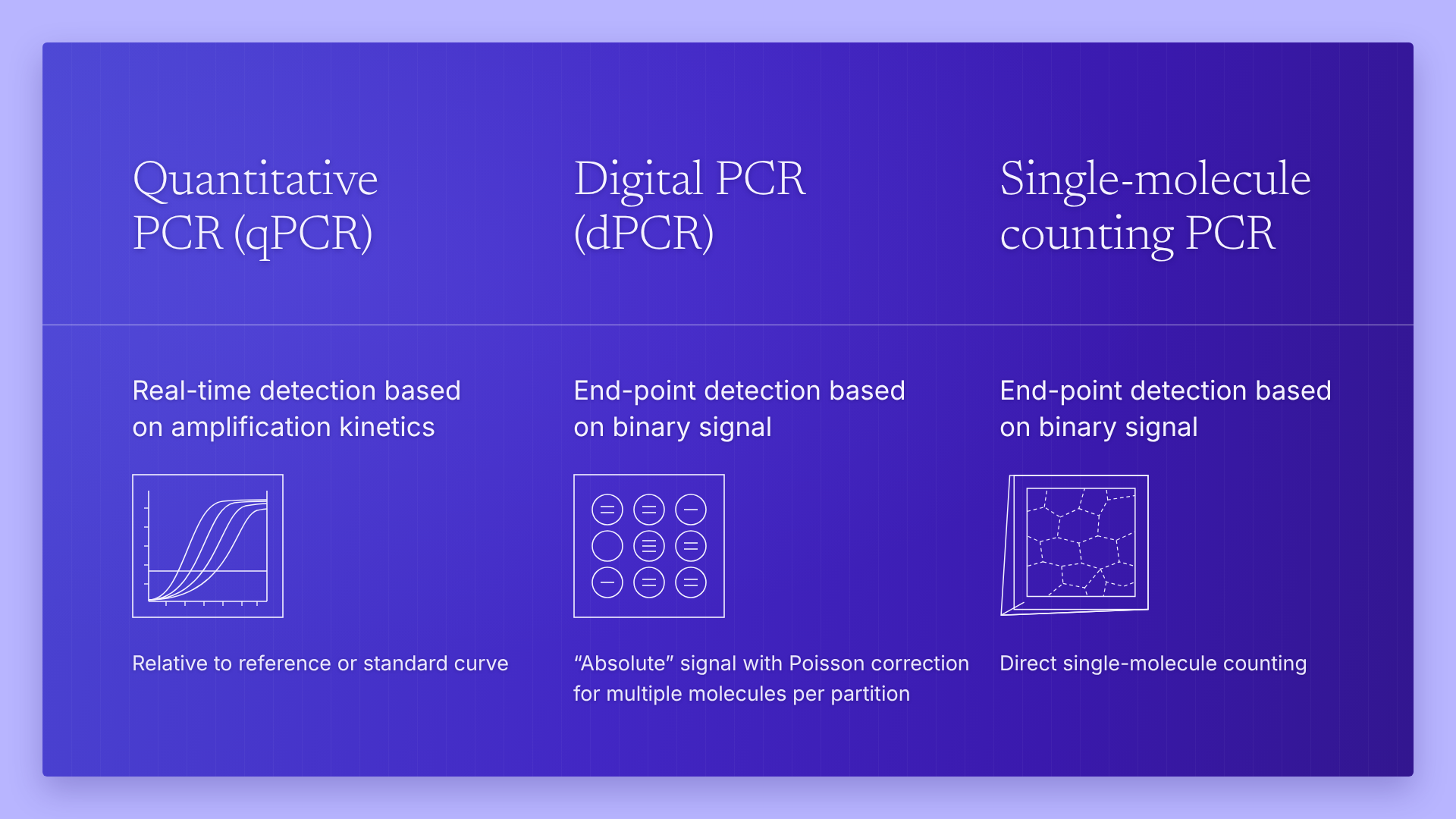
When you’re developing an assay for a limited specimen, every additional reaction has a cost in sample. For low-level targets, you also need enough molecules in the reaction to make the result interpretable. Those constraints influence which variants you can investigate and how confidently you can compare measurements over time.
At AMP 2026 in Seattle, we shared research on fusion transcripts, NPM1 mutation types, and DNA methylation. Our workshop and posters examined ways to measure several targets together and characterize performance at different abundances. For researchers evaluating these approaches, the useful details are in the assay coverage, the material tested, and the variability in the measurements.
Know which target you’re following
The AMP program covered measurable residual disease (MRD) research in hematologic malignancies as well as circulating tumor DNA in solid tumors. In both areas, researchers are interested in following molecular changes over time. An assay that reports individual transcripts or mutation types can help them examine changes that a combined signal might obscure.
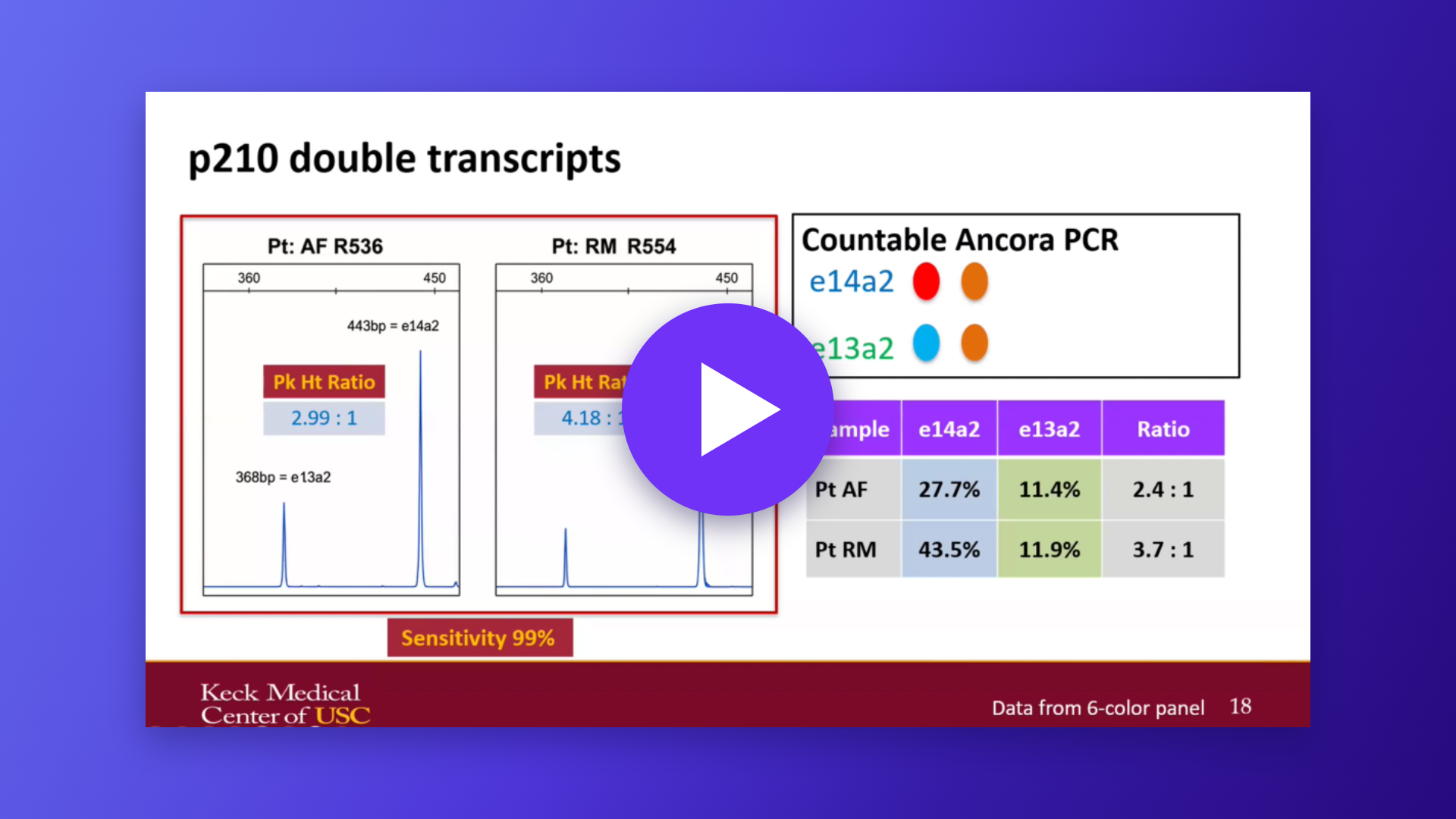
When two transcripts are present in a sample, separate measurements let you investigate whether their levels change together. That requires an assay that can distinguish them and enough precision to assess the changes you’re interested in. For longitudinal research, both capabilities belong in the evaluation.
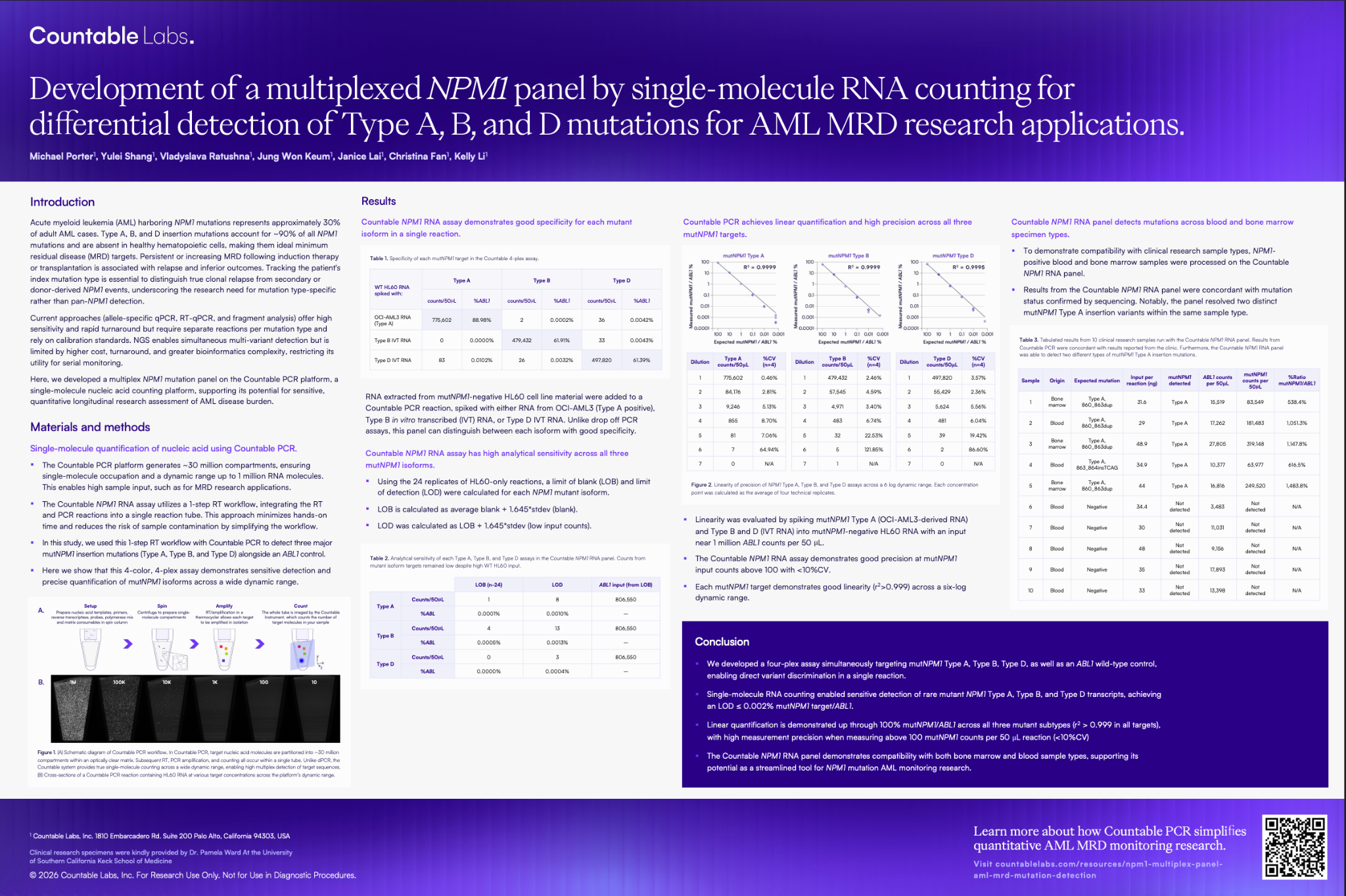
Our NPM1 poster shows how Countable PCR brings mutation-type discrimination and quantification into one reaction. The assay distinguishes Types A, B, and D while measuring an ABL1 reference, giving researchers individual mutation-type counts without splitting those targets across separate reactions. That makes it an appealing approach for studies that need to follow a specific NPM1 mutation type.
Look beyond the detection limit
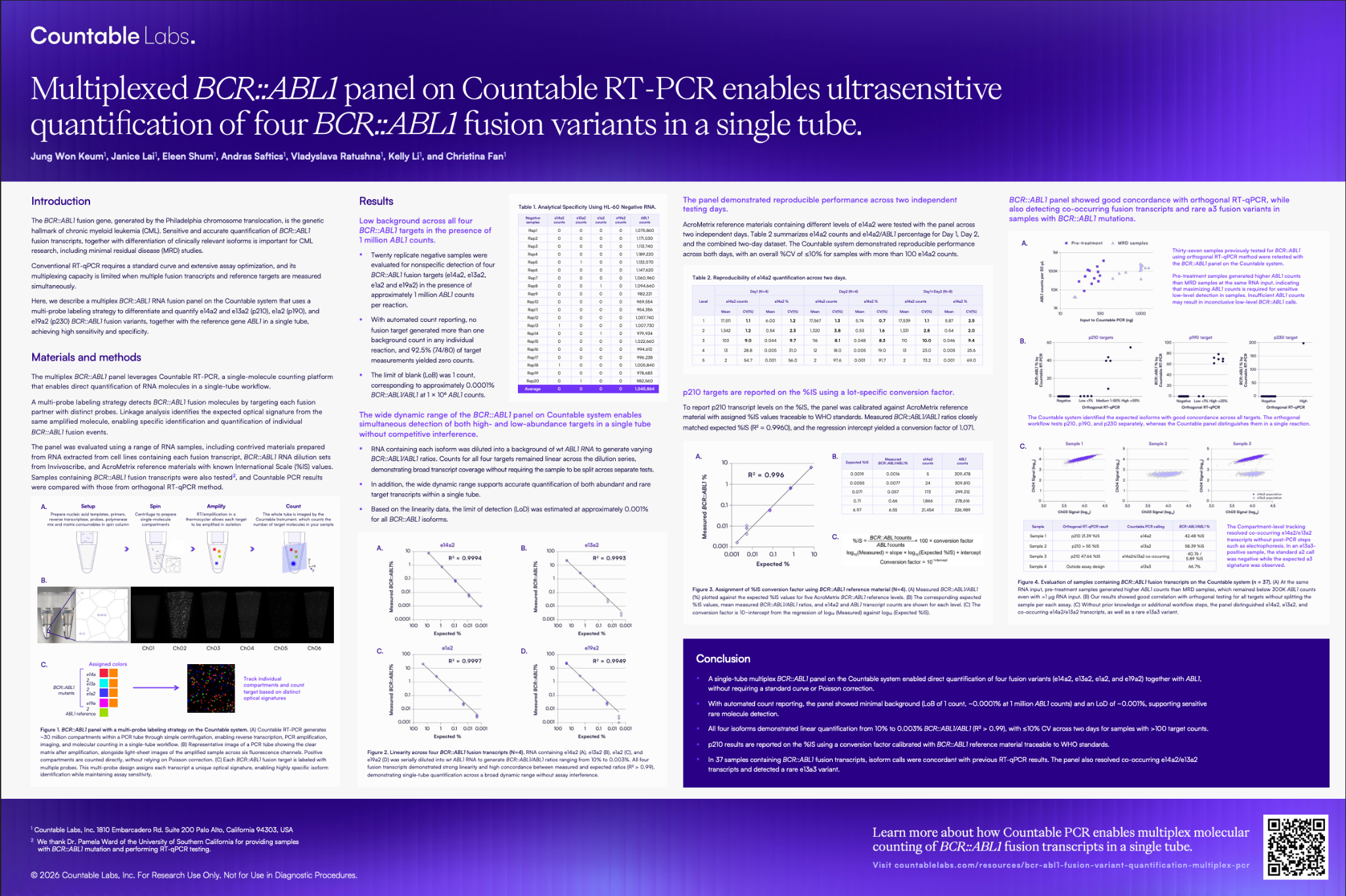
Our BCR::ABL1 poster combines multiplex transcript detection with precision data researchers can use to plan longitudinal studies. In the two-day e14a2 reference-material experiment, measurements above 100 target counts had coefficients of variation of 10% or less. That gives researchers a defined performance range to evaluate when they need to compare transcript levels over time.
The panel also measures ABL1 alongside the fusion transcripts, putting the target counts and reference-transcript context in the same reaction. For researchers working with rare transcripts, that combination provides both a specific molecular readout and information about amplifiable material to support interpretation.
Account for the sample preparation
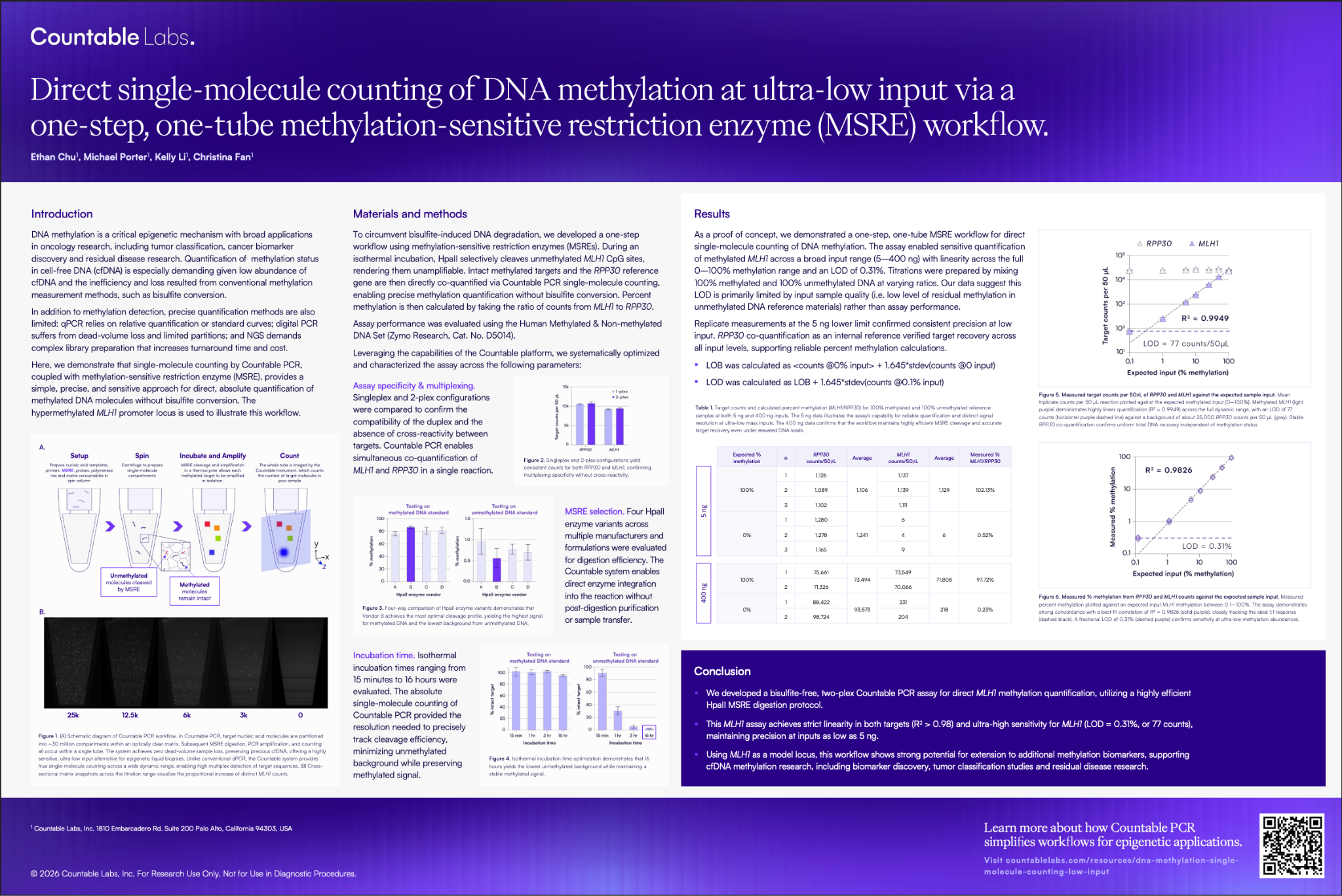
Sample preparation deserves the same attention as the readout, especially when material is scarce. Our methylation poster tested a bisulfite-free workflow in which methylation-sensitive restriction digestion and Countable PCR take place in one tube. The proof of concept measured an MLH1 model locus alongside an RPP30 reference using commercial reference DNA.
By keeping digestion and counting in one tube, the workflow avoids bisulfite conversion and post-digestion sample transfers. For researchers developing methylation assays, this reference-DNA proof of concept offers a simpler preparation approach to evaluate alongside direct counts of methylated targets.
Two assay-design questions from our workshop
Our workshop showed how Countable PCR can help researchers resolve individual BCR::ABL1 transcripts and investigate multiple KMT2A rearrangements from limited specimens.
Jerry Radich, MD, Professor and Kurt Enslein Endowed Chair at Fred Hutch Cancer Center, presented BCR::ABL1 data on transcript discrimination and reproducibility. The assay identified the expected transcripts in prepared samples, including both isoforms when they were present together. A separate reference-material study evaluated measurements across three laboratories over three days.
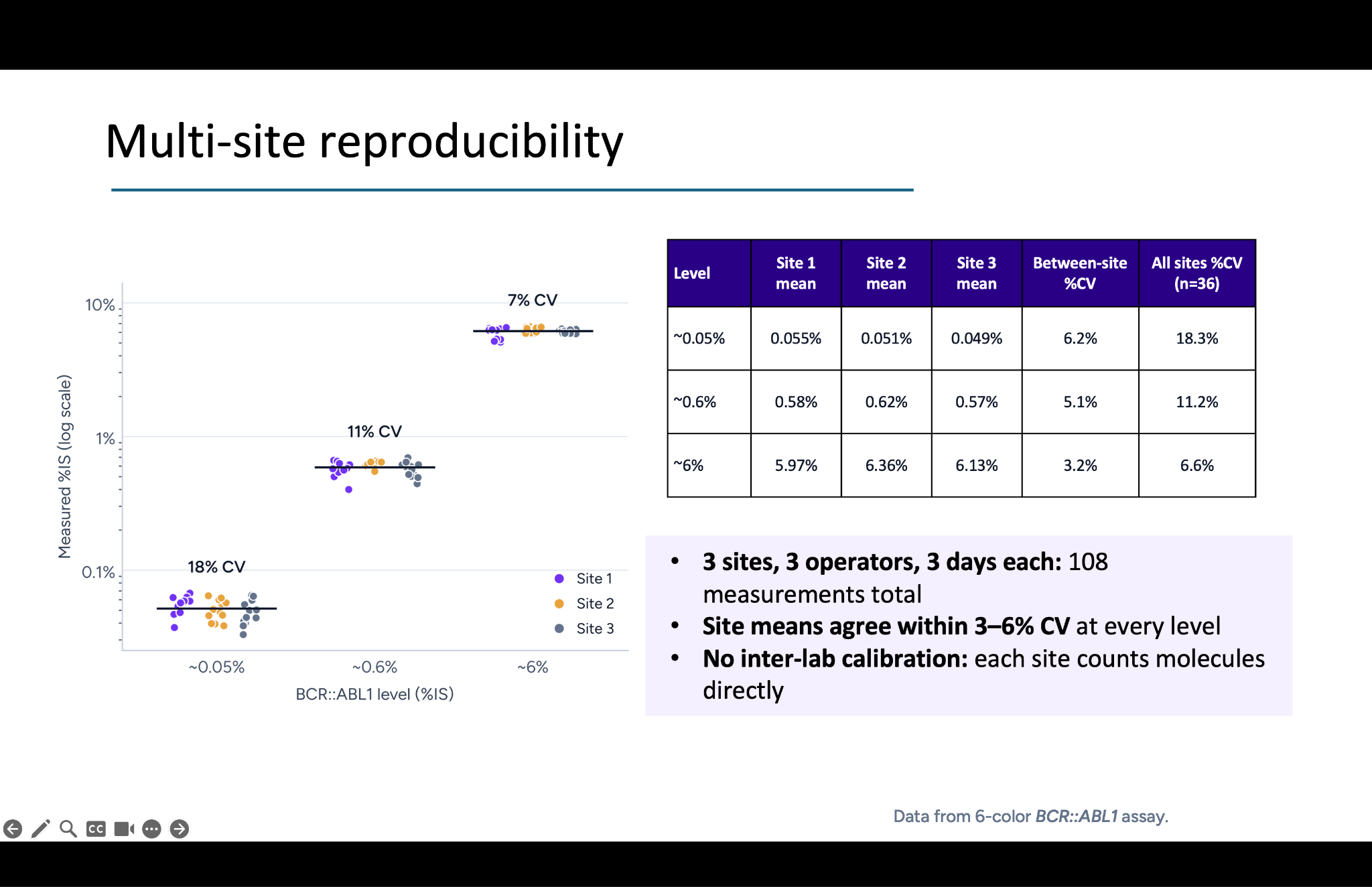
For longitudinal research, separate transcript counts let researchers follow each isoform rather than a combined signal. The multi-site data add evidence about how measurements vary across laboratories and days, helping teams evaluate the assay for studies that depend on repeatable molecular measurements.
Dongbin Xu, PhD, FACMG, Vice President and Laboratory Director at HematoLogics, presented a multiplex approach to KMT2A research. His team evaluated multiple fusion targets together, addressing the sample demands of running separate tests for several possible rearrangements. For researchers working with limited specimens, multiplexing offers a way to investigate more of the covered targets in the material available, while retaining individual fusion identification and quantification.
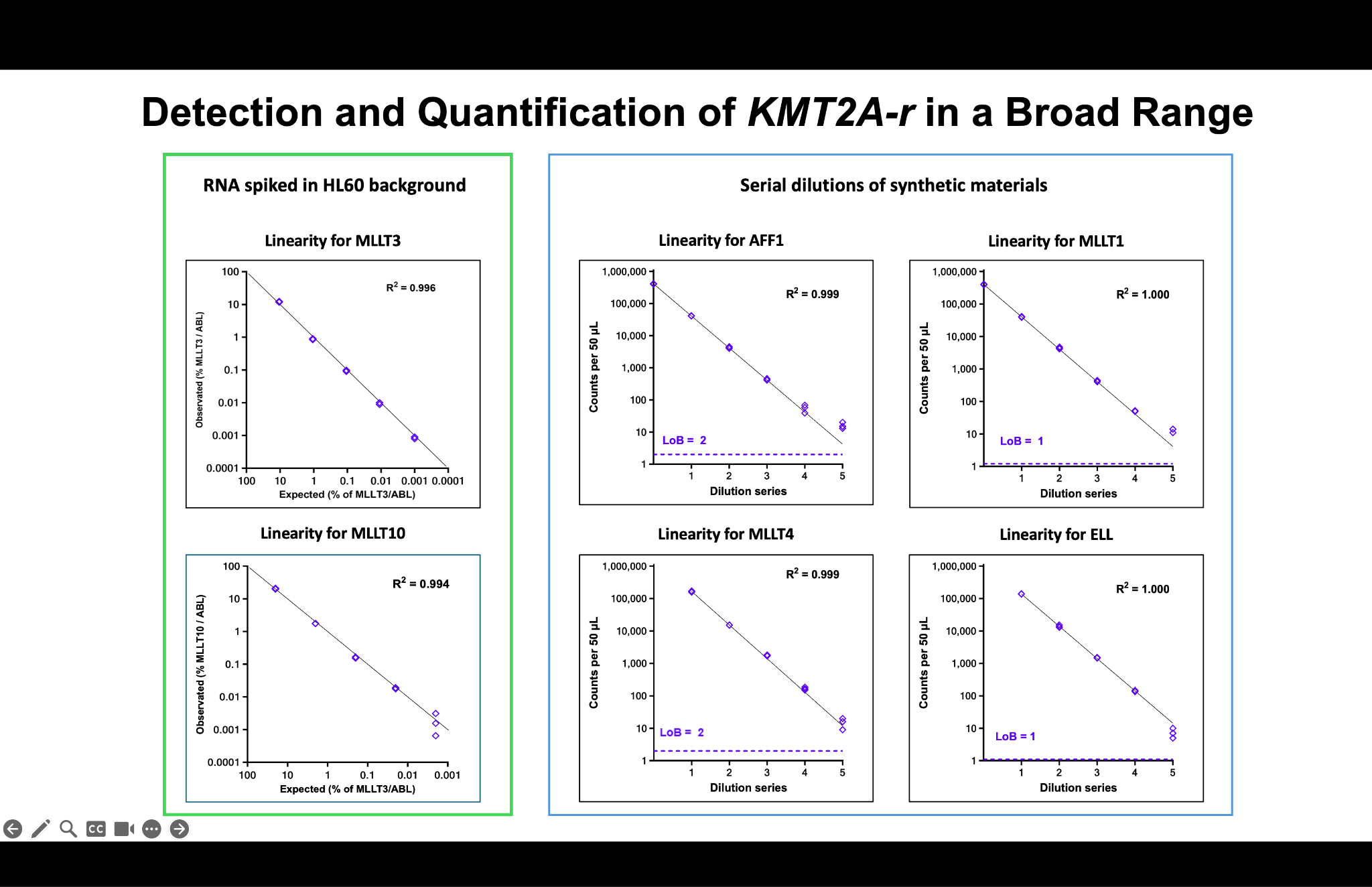
Our KMT2A poster demonstrates another application of multiplex counting. Its two-panel design identifies and quantifies multiple covered fusion transcripts, allowing researchers to investigate several potential rearrangements together. For studies working with limited material, it offers a practical approach to evaluating more targets within a defined assay design.
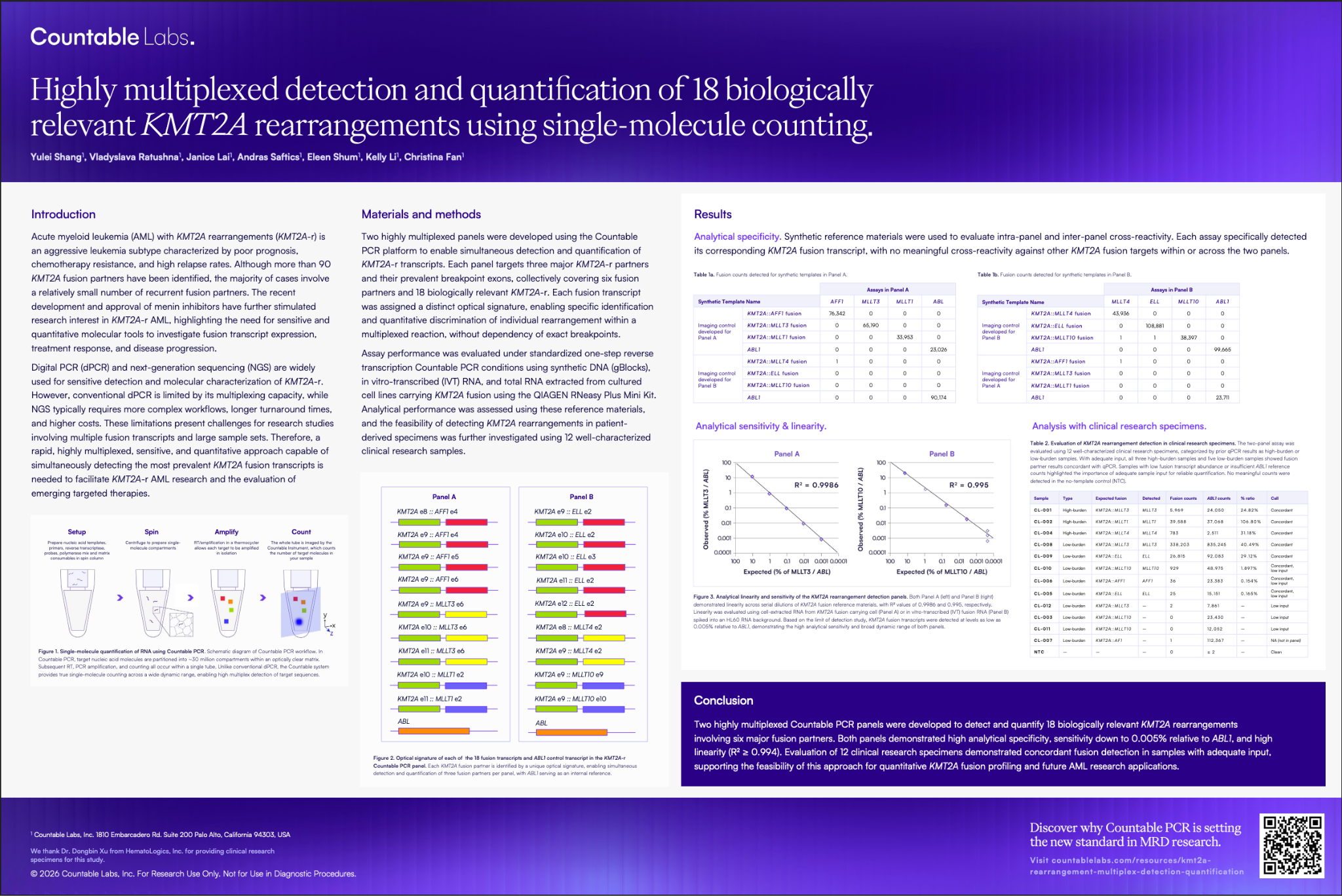
The workshop brought two practical capabilities into focus. Resolving individual transcripts gives researchers a more detailed view of the signals they want to follow, while multiplexing allows them to examine several covered rearrangements together. For laboratories planning heme oncology studies, these data offer a reason to evaluate Countable PCR with their own targets and specimens.
Back in the lab
If you’re considering a new assay, start with the experiment you need it to support. Choose a few representative samples and decide what you need to learn from an initial evaluation.
- Define the targets you need to distinguish. Check that the assay covers the relevant mutation types or fusion transcripts, and decide whether you need separate counts for each one.
- Test precision where it matters for your study. Evaluate repeat measurements at representative inputs and target abundances, including low-level samples. Compare that variability with the size of the change you hope to follow.
- Evaluate the whole workflow. Account for the material required for preparation, controls, and any repeat testing. Establish how you’ll use reference measurements and other quality checks to interpret low signals or non-detects.
The work we shared at AMP gives researchers several approaches to explore, from distinguishing transcripts in the same reaction to combining methylation preparation and counting in one tube. The value for your lab will depend on the questions you can answer with the samples you have. A focused evaluation can show where Countable PCR fits into that work and which experiments it could help you take on next.
Thanks to everyone who spent time with us at AMP and shared what they’re working on. If there’s a measurement you’re struggling with, we’d like to hear about it and discuss whether Countable PCR is worth evaluating for your research.
For Research Use Only. Not for use in diagnostic procedures.
Contact us to get started